WhatsApp Username & BSUID 2026
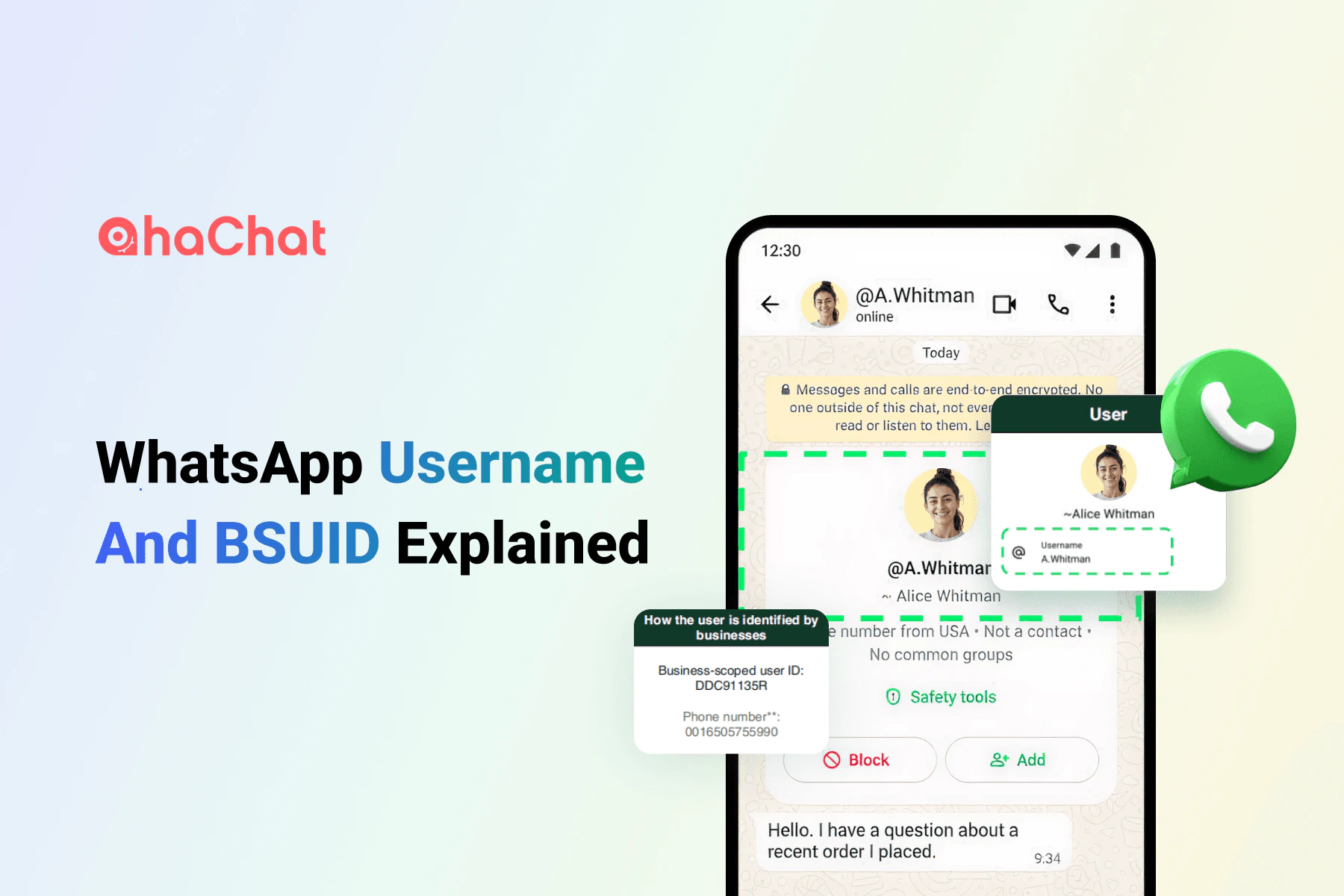
Starting June 2026, WhatsApp will officially introduce the usernames feature. This represents a historic shift in how customers are identified on this platform. If your CRM or AhaChat chatbot workflows currently rely on phone numbers as the only customer identifier, this update will directly impact your business operations.
With this update, customers can message or call businesses without sharing their personal phone numbers. Instead, the system will return a completely new identifier: BSUID (Business-Scoped User ID).
In this comprehensive guide, AhaChat will break down the upcoming changes, how BSUID works, the risks if your business fails to adapt, and the best preparation steps to ensure your operations run smoothly without interruption.
Why WhatsApp is Introducing Usernames
Privacy has become a major concern for global users. Until now, starting a conversation with a business on WhatsApp meant sharing your phone number by default. For privacy-conscious users, this was always a significant barrier when they simply wanted to ask a quick question, explore a product, or contact support.
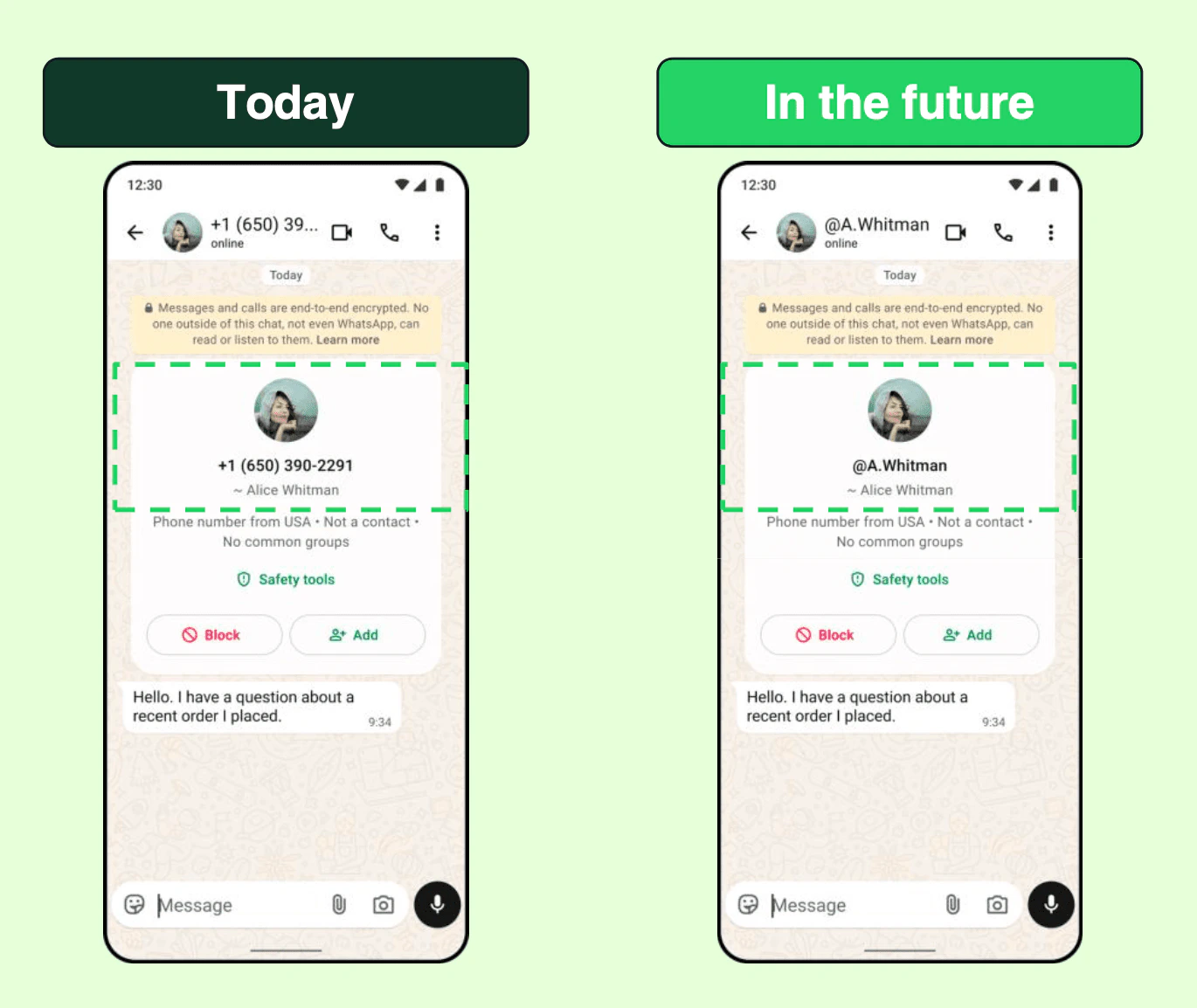
The username feature was created to solve this friction point. Users can create a unique username and use it to message businesses instead of sharing their personal phone numbers.
This change also benefits businesses. Business accounts can also set their own usernames, making it easier for customers to find and contact them directly on WhatsApp's search bar without needing to know or save the business's phone number first. Removing this barrier to entry dramatically increases organic customer conversions.
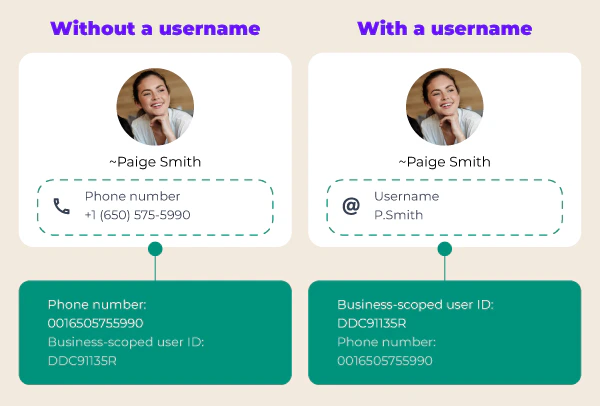
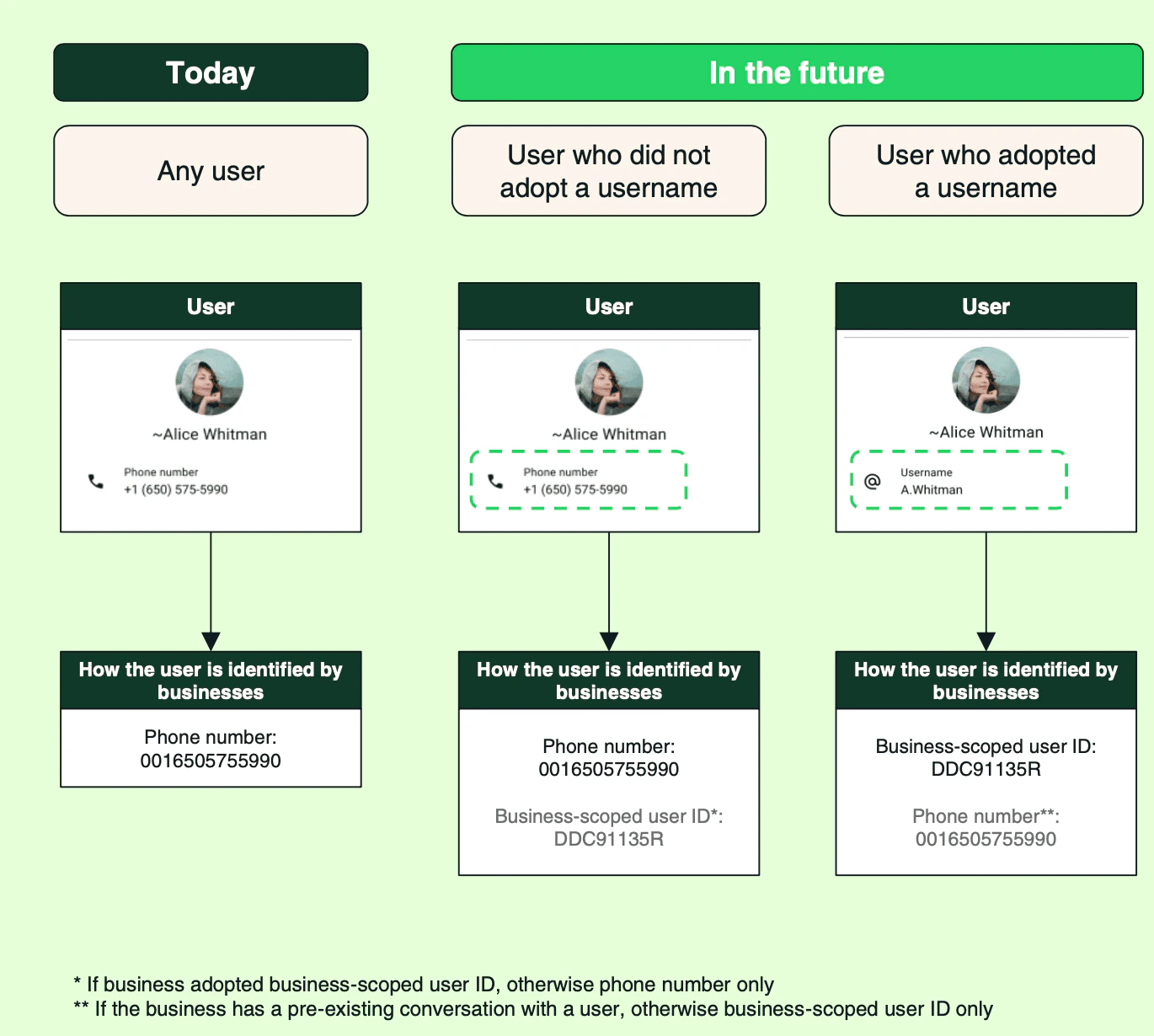
Customer Identification: Before vs. After June 2026
To help you visualize the shift in customer identification, here is a detailed comparison table:
| Characteristic | Before June 2026 | From June 2026 Onward |
|---|---|---|
| Primary Identifier | Phone number (wa_id) | BSUID (user_id) is mandatory. Phone number is conditional. |
| User Privacy | Phone number is exposed on chat | Phone number can be hidden via Username |
| New Inbound Flows | Receives both phone and wa_id | Only receives BSUID (if username hides the phone number) |
| OTP & Verification | Sent directly to the phone number | Must explicitly collect phone number before triggering OTP |
| Existing Customer History | Preserved via contact matching | Automatically syncs and maps BSUID to the existing phone record |
This transition is visually summarized in the comparison matrix below:
Technical Analysis & How BSUID Works
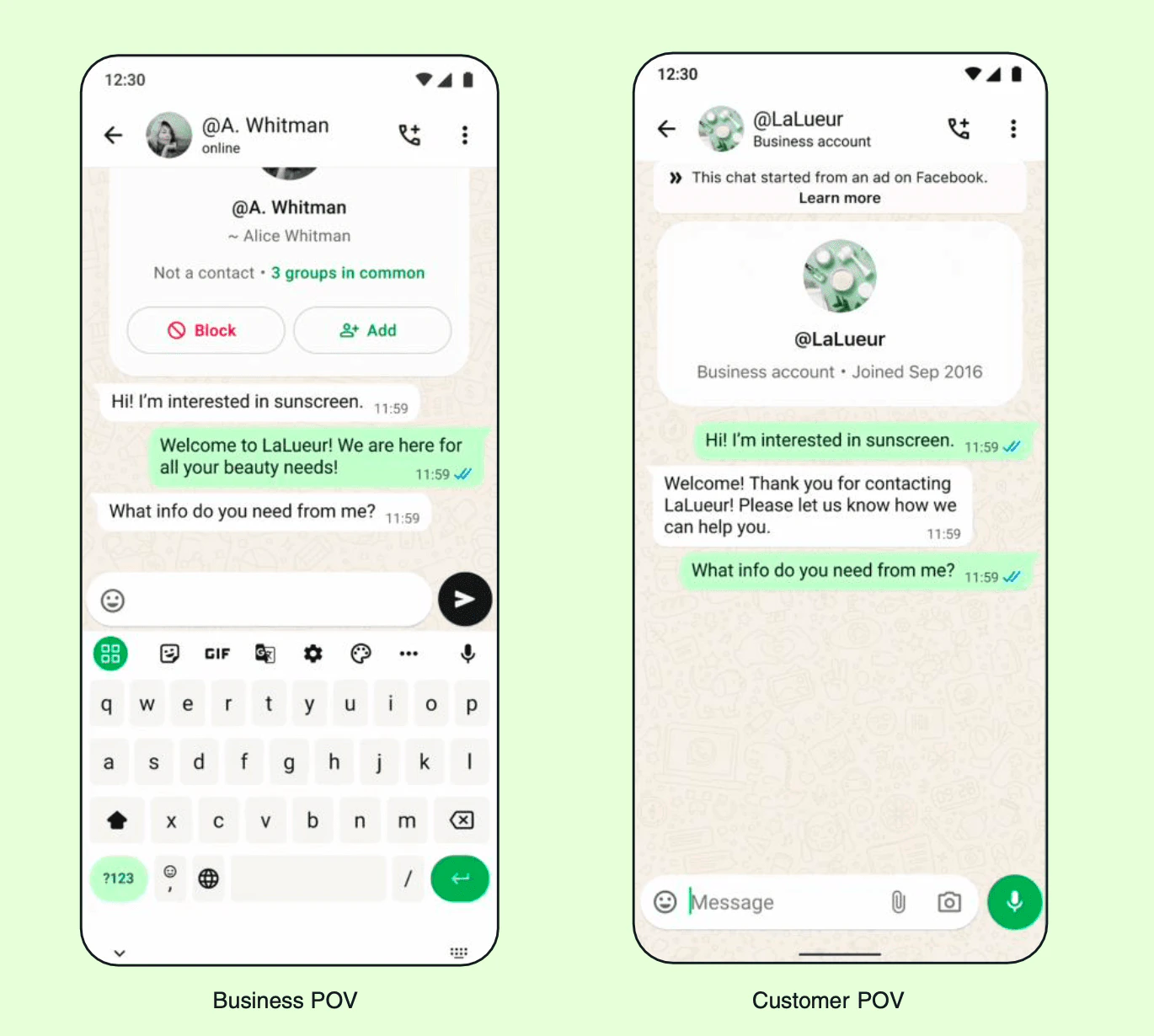
Once the username feature is active, incoming WhatsApp Business API traffic to AhaChat will follow a clear split-flow mechanism:
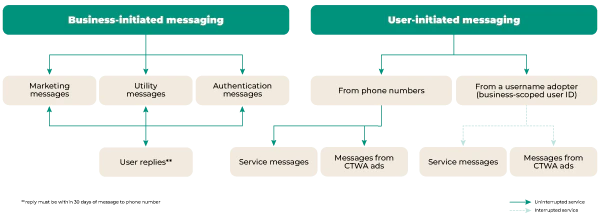
BSUID (Business-Scoped User ID) is a stable, unique identifier automatically generated by Meta for each user-business relationship. It allows you to send messages and track users even when you do not have their phone numbers.
4 Core Technical Rules of BSUID
Businesses must understand these 4 core mechanics to properly update their CRM and chatbot logic:
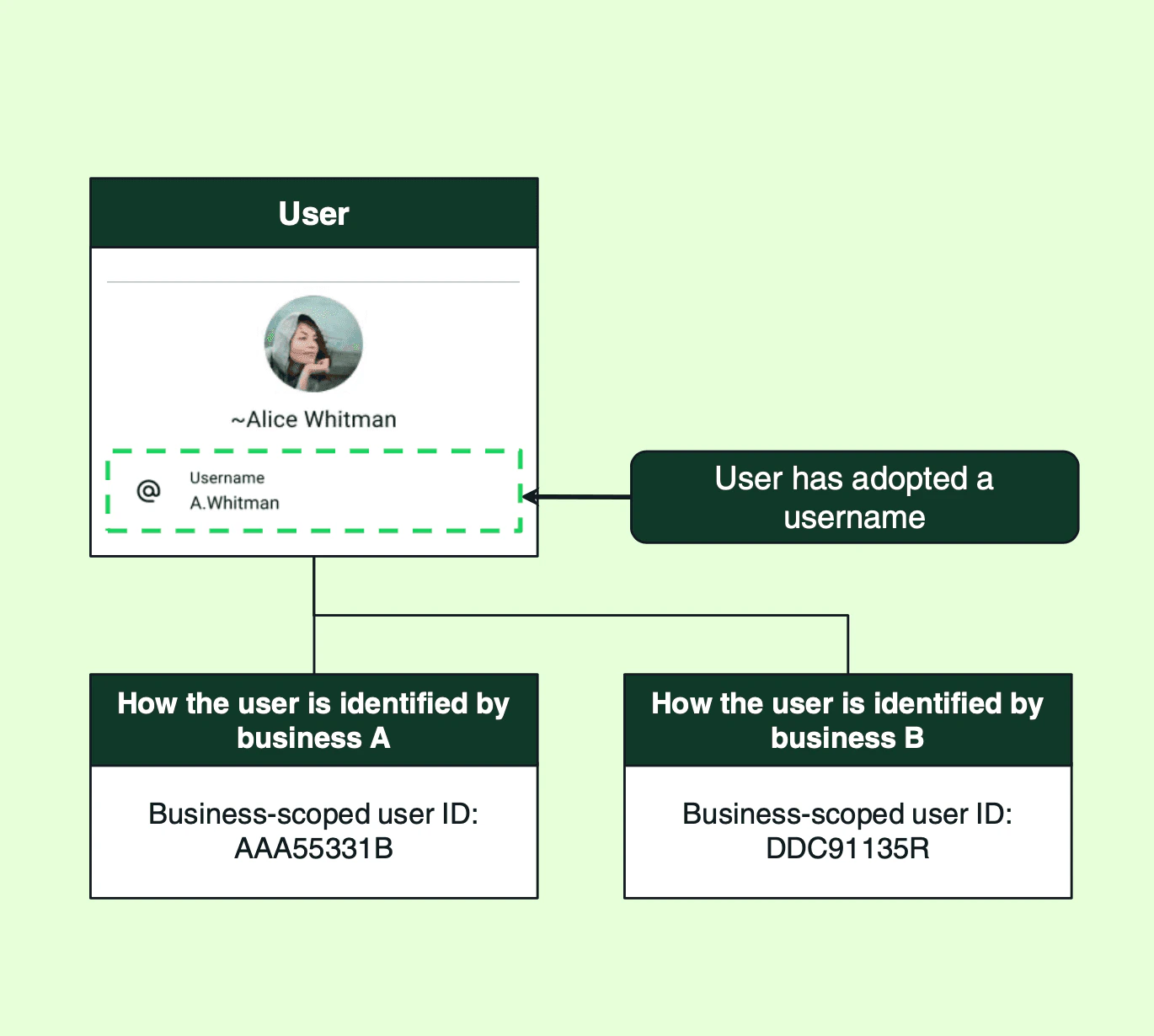
- Scoped by Business Portfolio: The same WhatsApp user will have a completely different BSUID for Business A than they do for Business B. This privacy isolation design ensures that Business A cannot track a user's activities or history with Business B.
- Fixed Structural Format: A BSUID begins with the user's ISO 3166 alpha-2 two-letter country code, followed by a dot and a unique alphanumeric string (up to 128 characters). For example:
VN.13491208655302741918. The entire string must be used exactly as is in APIs without any truncation.
- Tied to a Business Portfolio: You cannot use a BSUID generated under one Meta Business Manager portfolio to send messages to the same user from another portfolio.
- Present in Webhooks Regardless of Username Activation: BSUID is automatically generated by Meta and returned under the
user_idfield in all webhook payloads, even if the user has not publically set a username.
Operational Impact & Solutions on AhaChat
This update impacts various business departments differently. Here is a detailed breakdown of the challenges and their concrete solutions:
CRM & Customer Database Management
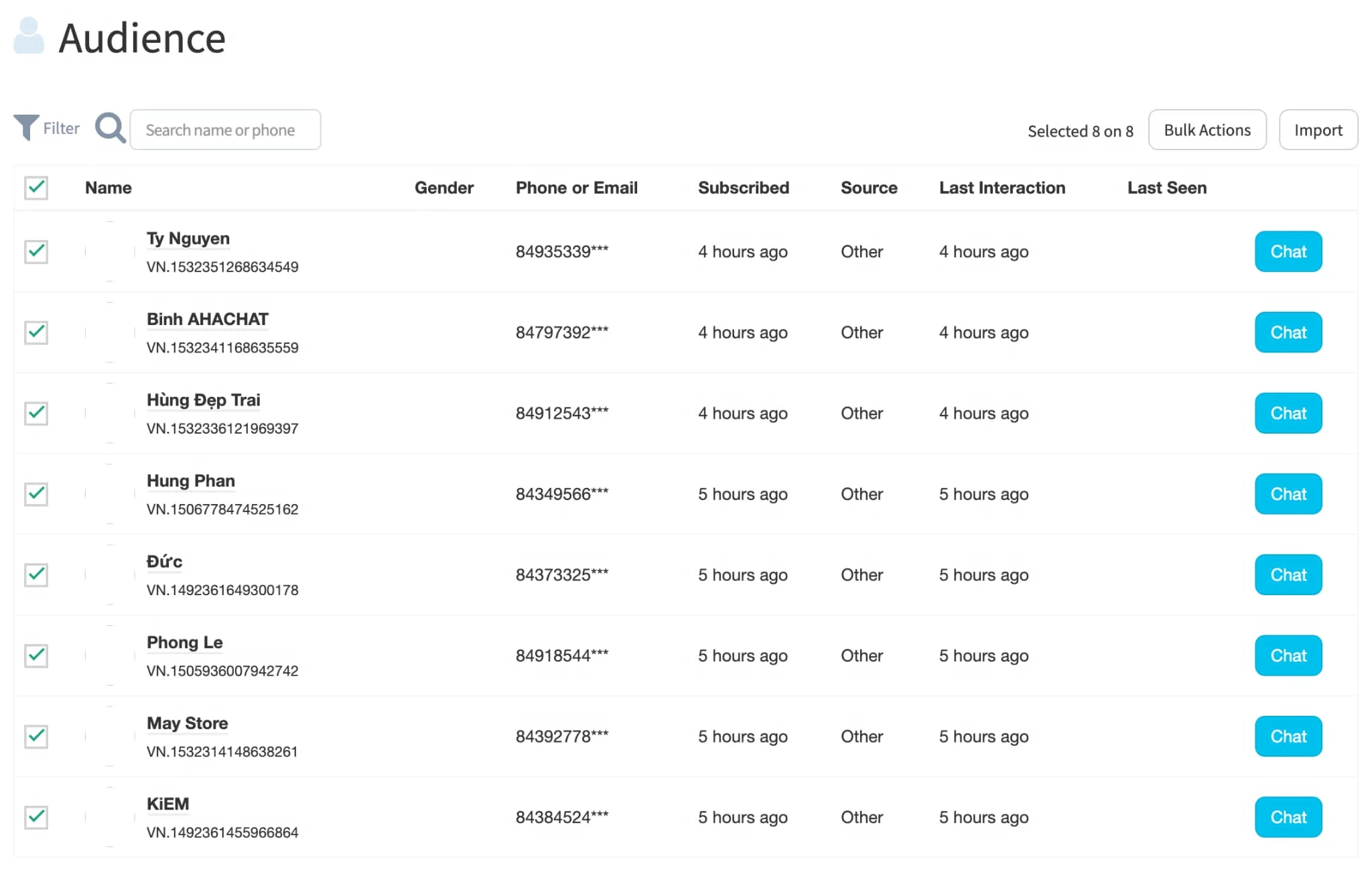
This is the area with the most direct impact. If your CRM uses the phone number as the primary key, inbound messages from username users who hide their number will fail to resolve. The system will throw errors or create separate blank profiles, breaking chatbot personalization and agent-lookup history.
- AhaChat Solution: Update your database schema to include a
BSUIDfield alongside thePhonefield. Update your query logic to search for customers using both identifiers. AhaChat automatically links incoming BSUID values to the corresponding customer profile as soon as the phone number is shared within the chat.
Marketing Teams
- Click-to-WhatsApp (CTWA) Ads: For new users clicking ads and starting chats, if they have enabled usernames and hidden their phone numbers, you will receive only a BSUID. Your attribution models, routing, and follow-up journeys must support BSUID-only contacts to avoid missing valuable leads.
- Lead Generation & Opt-ins: For marketing campaigns where having a phone number is critical, marketers should implement WhatsApp's native contact-sharing CTA button inside AhaChat. This provides a frictionless, one-tap way for users to explicitly share their phone number with consent.
Customer Support Teams
In the AhaChat unified shared inbox, conversations from username users without a known phone number will display their username or BSUID. Support agents must be trained to recognize these as legitimate, paying contacts. Chatbot automated routing should also be configured to gracefully handle BSUID-only conversations.
Privacy & Compliance (GDPR)
Because BSUID is a stable identifier tied to an individual, it is classified as personal data under regulations like GDPR or local data protection acts. Businesses must update their privacy documentation, define BSUID retention policies, and ensure BSUID-only profiles are included in "Right to be Forgotten" deletion workflows.
Action Plan & Timeline
Meta is rolling out this update in distinct phases to give businesses time to adjust:
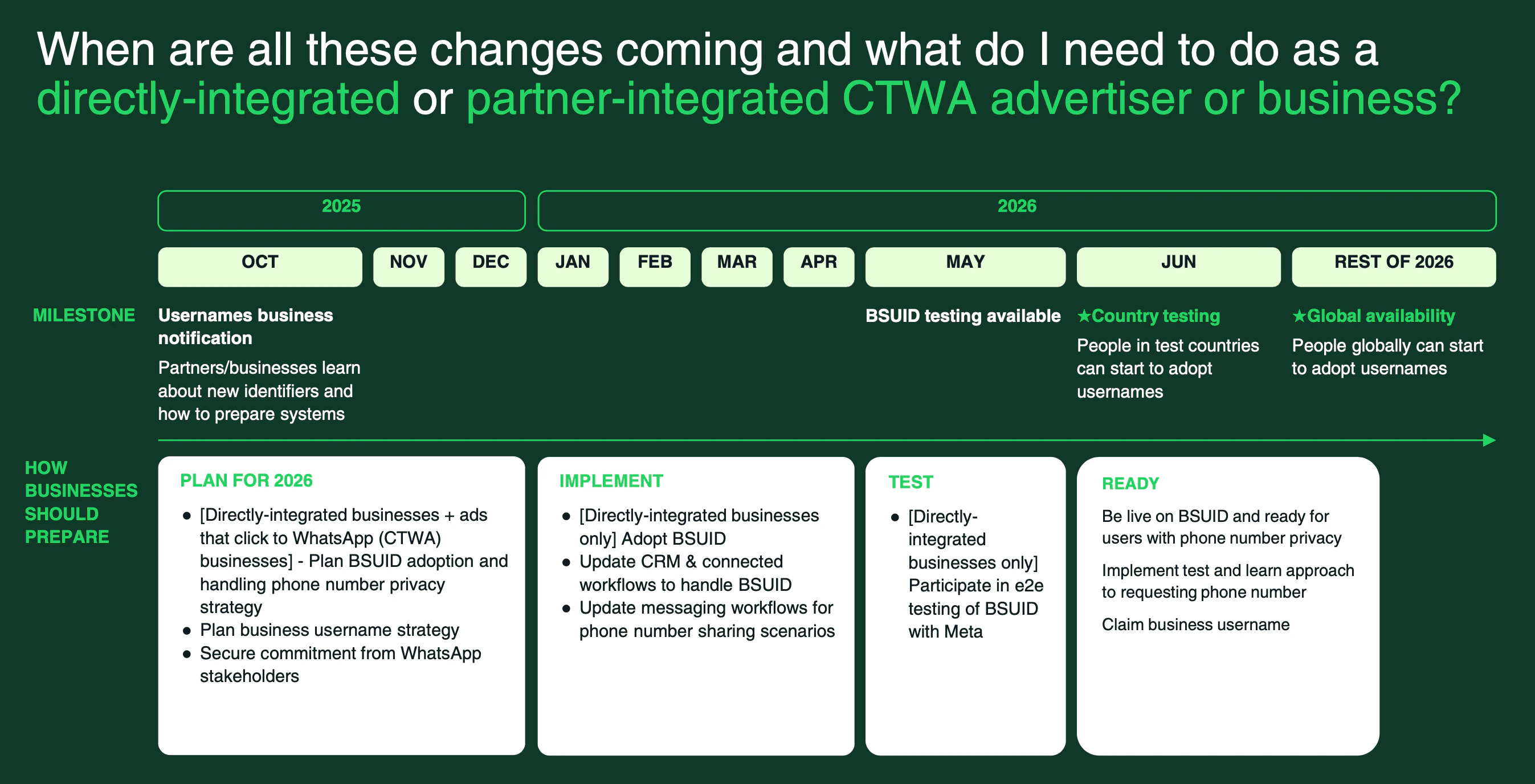
- March 31, 2026: BSUIDs begin appearing in incoming webhook payloads.
- May 2026: Outbound testing opens, allowing businesses to send template messages using BSUID.
- June 2026: Pilot country rollouts begin for user username selections.
- End of 2026: Username features expand globally.
To prepare your systems, AhaChat recommends following this 5-step concrete checklist:
1. Evaluate Current Systems Audit all automated chatbots, CRM configurations, and API integrations to identify where phone numbers are treated as the mandatory primary key.
2. Upgrade Database Schema
Add a custom BSUID field (alphanumeric string up to 131 characters) to your customer database table and support matching lookups on both fields.
3. Redesign Chatbot Flows Configure your AhaChat chatbot journeys to support BSUID. Build automated flows to request phone number consent via WhatsApp's native sharing CTA when an OTP or delivery address is needed.
4. Staging & End-to-End Testing Use test accounts with usernames enabled to run end-to-end tests from CTWA ads to automated chat flows, verifying that database profiles are matched and no duplicates are created.
5. Deploy & Monitor Roll out your updated integration to production. Monitor profile creation, OTP delivery rates, and agent feedback closely during the initial weeks to optimize prompt timing.
Frequently Asked Questions (FAQ)
1. Will my existing customers' phone numbers disappear? Absolutely not. For all contacts with whom you have had previous interactions, their phone numbers will remain safely stored in your AhaChat contact book. Meta's Contact Book feature launched in April 2026 automatically syncs existing relationships.
2. Can I still send template messages to a BSUID? Yes. For Marketing and Utility message templates, Meta has officially supported using BSUIDs as the recipient identifier since May 2026. The only exception is Authentication (OTP) templates, which still require a phone number.
3. Will Click-to-WhatsApp ads lose their effectiveness? No. Your ads will continue to drive conversations normally. The only difference is that if a new user clicks your ad and has hidden their number, you will receive a BSUID instead of a phone number. This actually increases conversion rates for highly privacy-conscious users who were previously afraid of exposing their numbers.
4. Will the same customer have the same BSUID across my different brands? No. BSUIDs are strictly scoped per Business Portfolio. If you run two different brands under two separate Meta Business Managers, the same user will have different BSUIDs for each brand, and you cannot share them across brands.
5. If a customer changes or deletes their username, will their BSUID change? No. A BSUID is a permanent identifier tied to the user-business pair. A user can change or delete their public username as many times as they want, but their BSUID in your database will remain completely stable.
6. What support does AhaChat provide during this transition? AhaChat has fully updated its platform architecture to support BSUID webhooks. We provide complete technical guides, optimized chatbot templates to request phone number consent, and dedicated developer support to help you update your database configurations.